


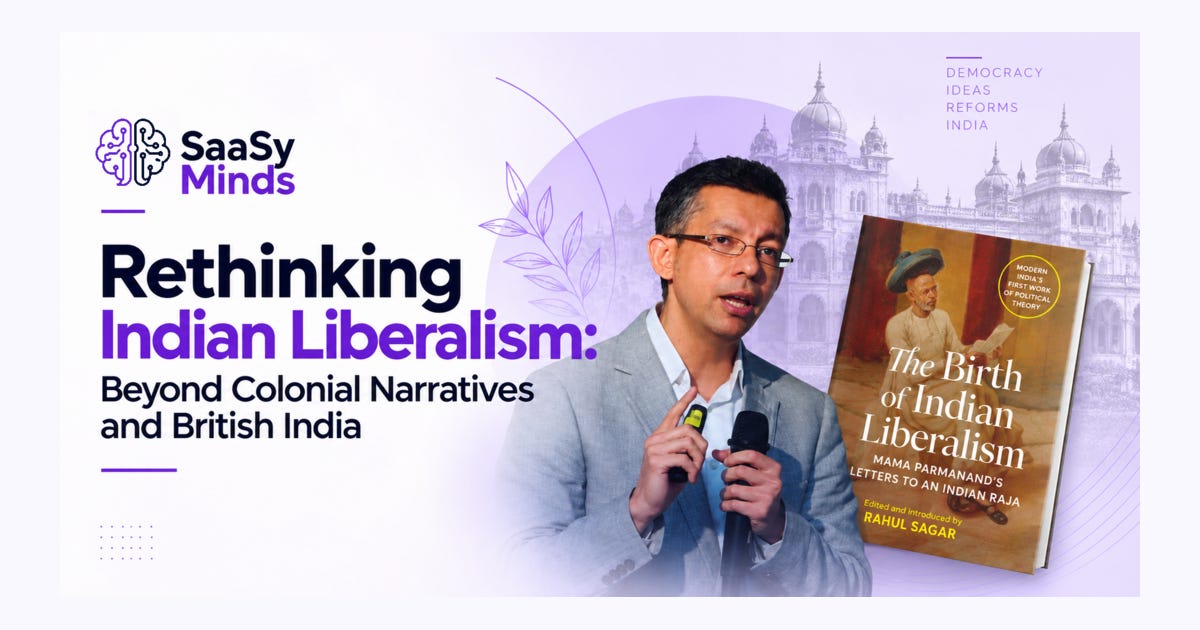
The 5th Annual Indian Liberals Lecture, delivered by Professor Rahul Sagar, challenges a central premise taught in classrooms. For generations, standard historical narratives have treated Indian liberalism as a mere derivative of Western thought, born out of British India under the intellectual lights of Bengal and figures like Tagore. Professor Sagar argues that this view is fundamentally mistaken. The true roots of Indian liberalism stretch deeper, originating not in British colonial territories, but in “Indian India”, the native princely states.
The Three Blind Spots of Indian History
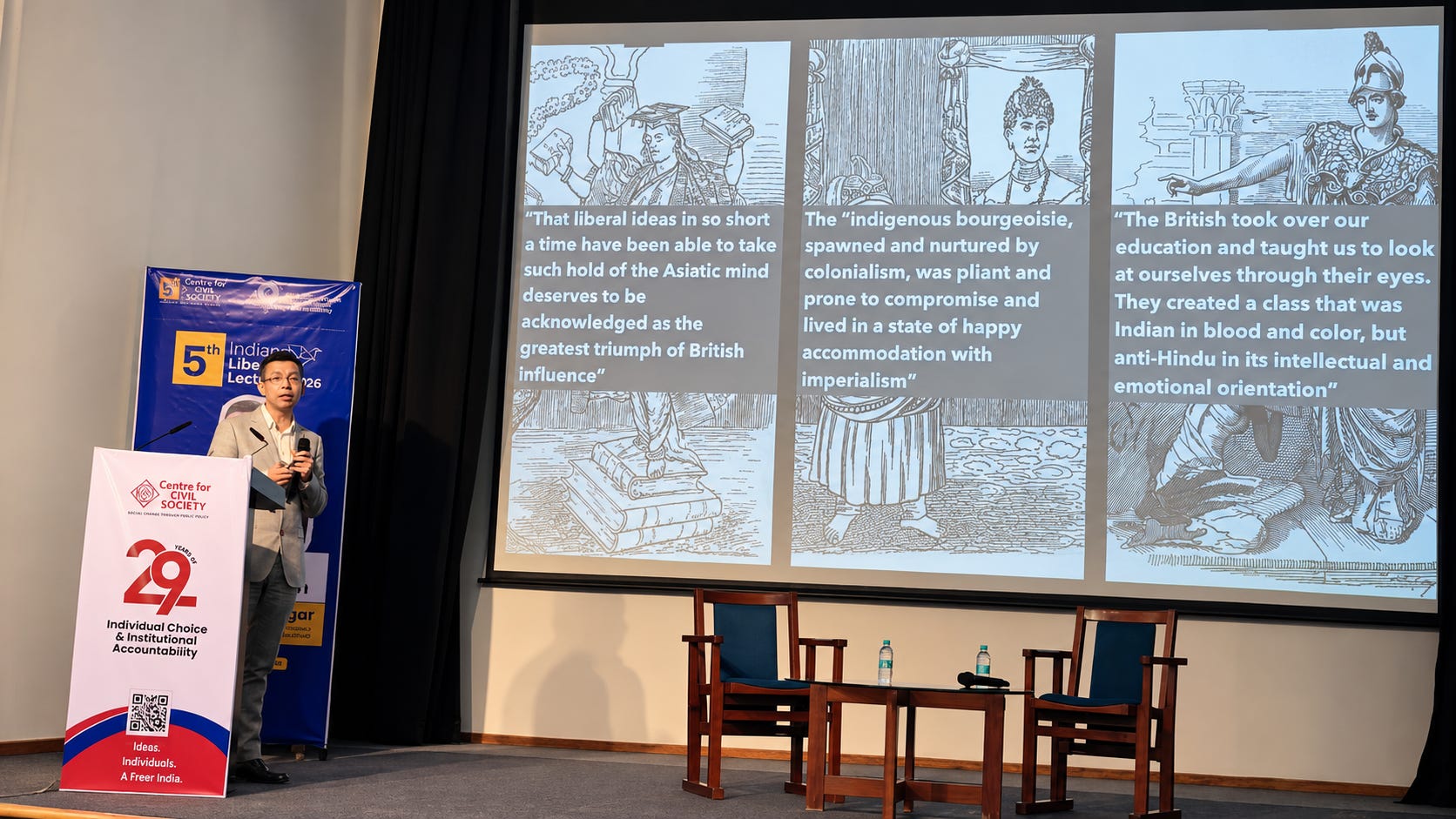
The prevailing view relies on three comfortable, yet deeply flawed, assumptions. British imperialists claimed liberalism was their greatest gift to the Asiatic mind. Subaltern historians argued that the indigenous bourgeoisie was a pliant collaborator with colonialism. Meanwhile, early right-wing narratives claimed that urban liberal elites were merely Indian in blood and colour, but entirely Western or anti-traditional in orientation. According to Sagar, all three schools of thought share the same blind spot because they look exclusively at British India and ignore the intellectual ferment happening elsewhere.
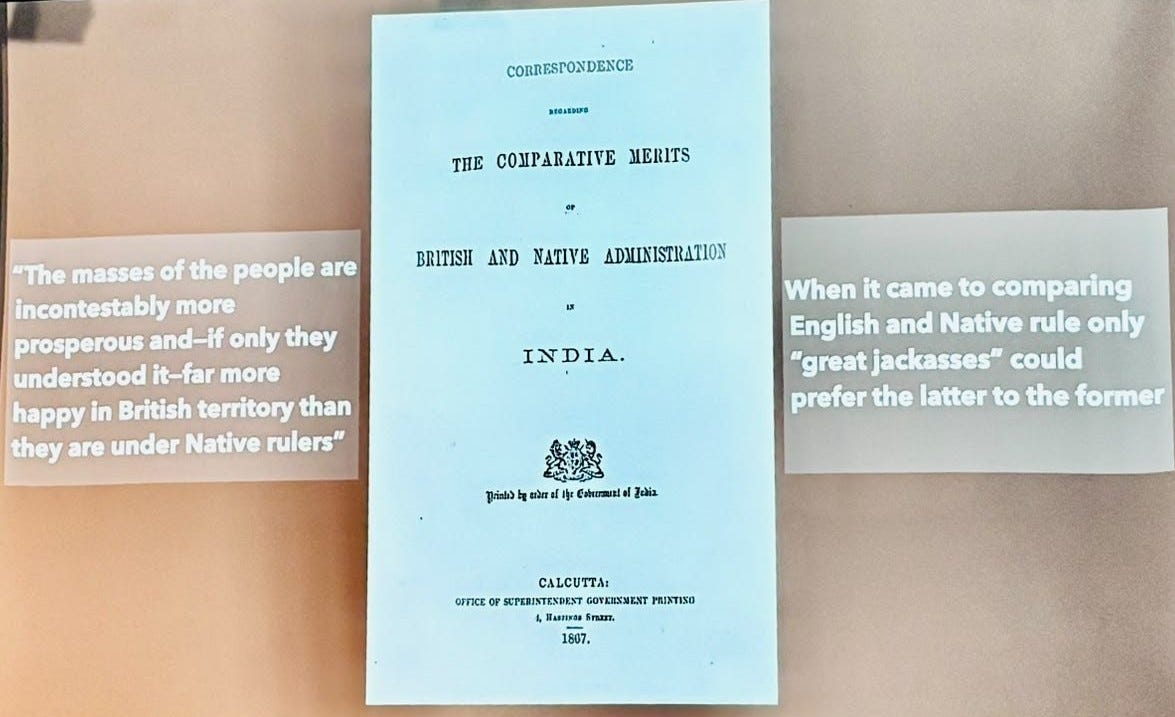
The revisionist history begins in 1867. Following a high-stakes debate in the British House of Lords over whether to return the princely state of Mysore to local rule, British administrators published a scathing report. It declared native rule chaotic, arbitrary, and devoid of property rights, concluding that only a fool would prefer a Maharaja to British efficiency.
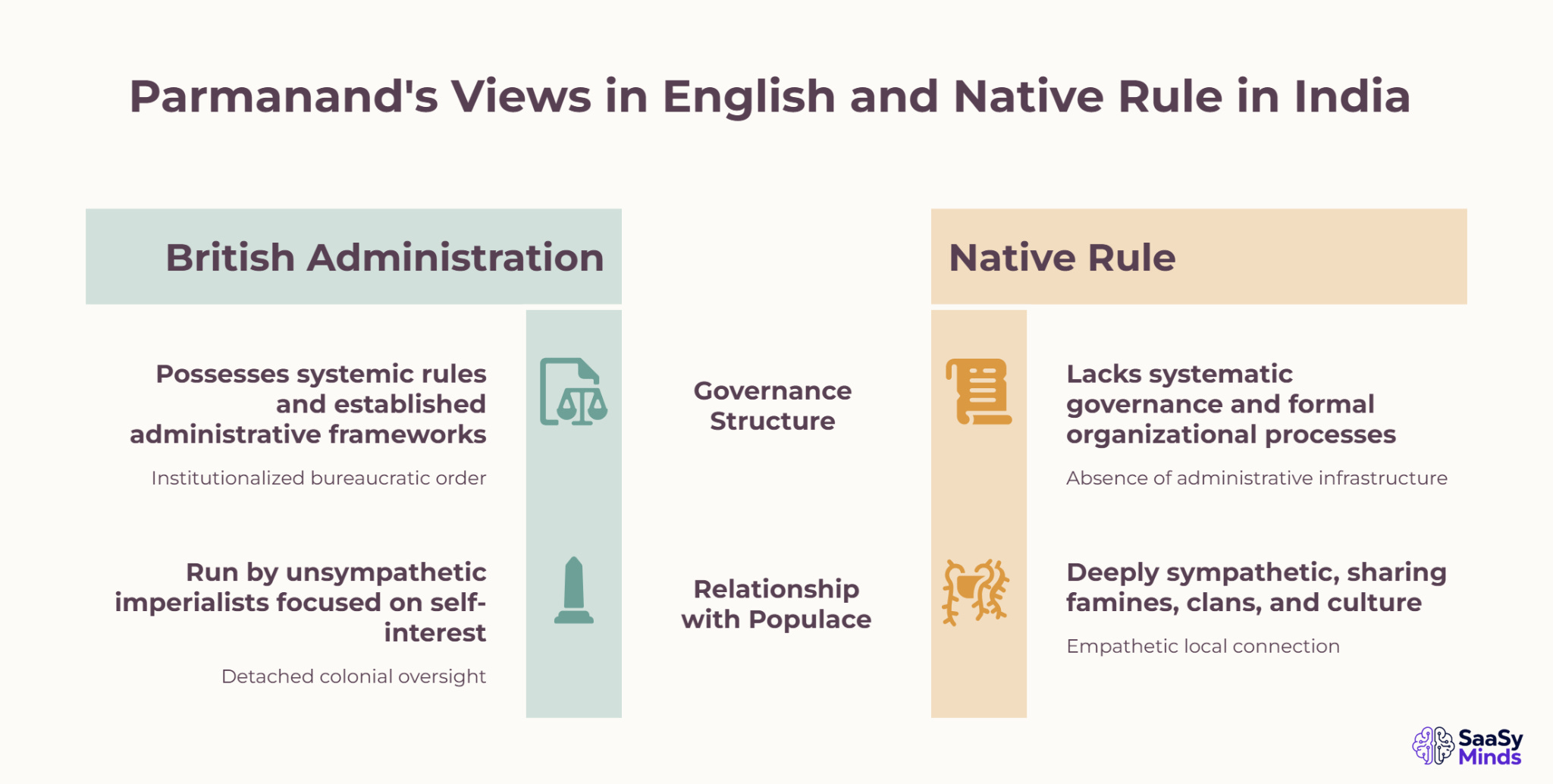
Most assume the population accepted this critique in silence. Instead, the empire wrote back. An anonymous editorial in Bombay, later published as a pamphlet titled English and Native Rule in India, turned the tables. The author argued that while British administration possessed systemic rules, it was run by unsympathetic imperialists who ultimately cared only for themselves. Conversely, native rulers were deeply sympathetic to their people, sharing their famines, clans, and culture, but they lacked systematic governance. The logical conclusion was clear: if Indian principalities wanted to survive and thrive, their Maharajas had to learn to organise their states systematically.
Behind the Scenes with Mama Parmanand
Behind these anonymous essays was a remarkable, almost forgotten figure whom Professor Sagar has spent years unearthing from the archives: Narayan Mahadev Parmanand, known to his contemporaries as Mama Parmanand. Born into a humble family and graduating near the top of Elphinstone College on pure merit, Parmanand chose to live as a political recluse. He deliberately published his work anonymously so that his ideas would stand entirely on their own merit, free from the distraction of personal ego.
Years later, when British critics claimed native states were hopeless, Parmanand whispered his final manuscript, Letters to an Indian Raja, to his assistants while bedridden with Parkinson’s. Published in 1891, it stands as the first comprehensive treatise written in modern India outlining what a native liberal regime should look like.
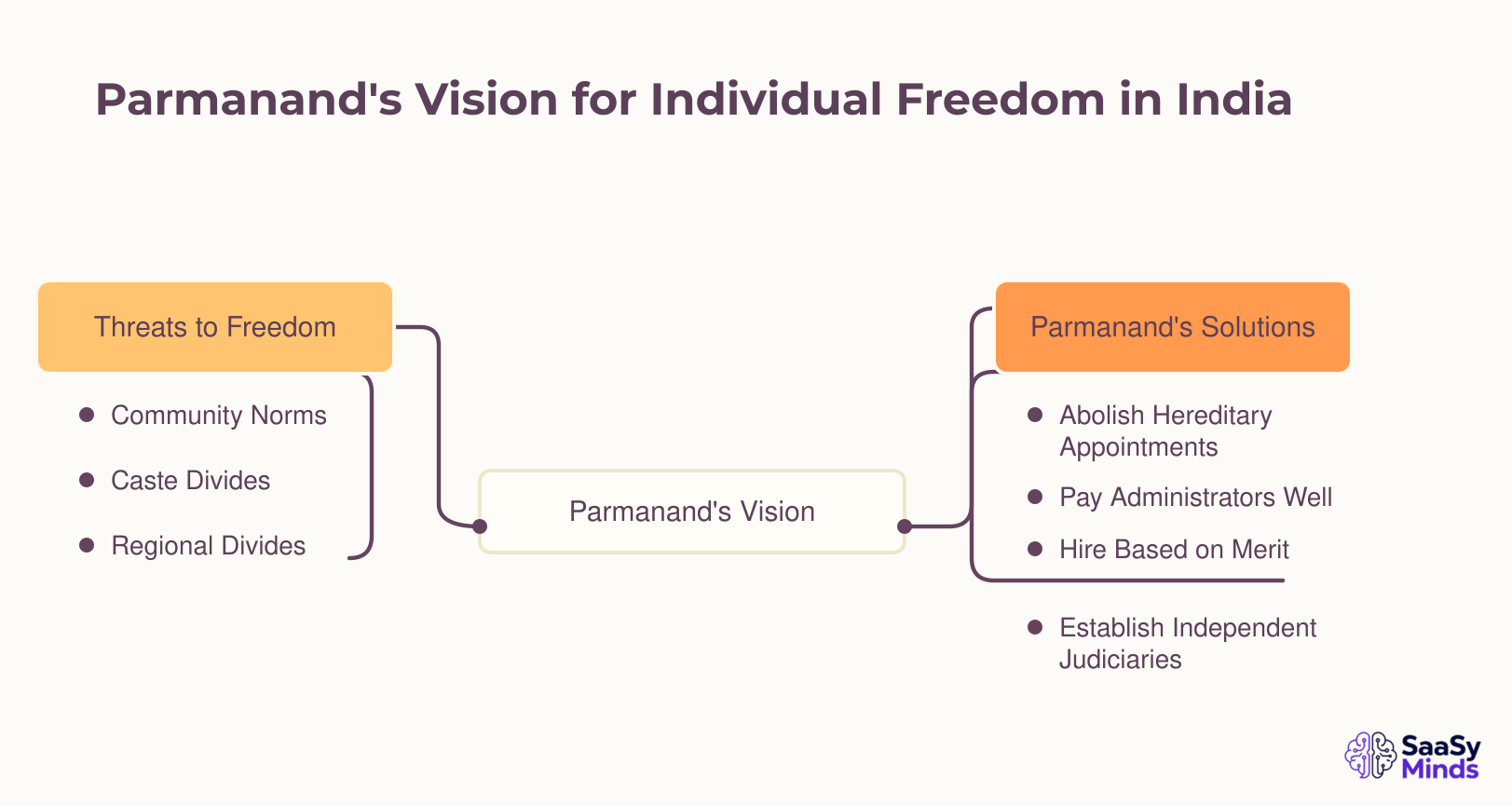
Parmanand argued that India’s primary threat to individual freedom was not mass industrialisation or large political parties, as it was in the West. Instead, it was the intimate, crushing tyranny of community norms. Society dictated what people could eat, where they could live, who they could marry, and what professions they could pursue. Because an ordinary democracy would only empower groups to double down on caste and regional divides, Parmanand argued that enlightened Maharajas were uniquely positioned to force society to reform. He urged them to abolish hereditary appointments, pay administrators well to stamp out bribery, establish independent judiciaries, and hire individuals strictly based on merit rather than family ties.
Where Princely States Outperformed British India
This was not just abstract theory. Several princely states took these liberal blueprints to heart. Reformers like Sir Madhava Rao served as dewan across Travancore, Indore, and Baroda, implementing structured governance. Statistical data reveals that by 1900, life expectancy in Travancore was three times higher and per capita income five times higher than in British India. States like Bhavnagar, Gondal, Kolhapur, Baroda, and Mysore introduced sweeping reforms, investing heavily in infrastructure, modern banking, and universal education. Gwalior and Baroda even became the first to send students abroad to Japan and China to learn industrial skills.
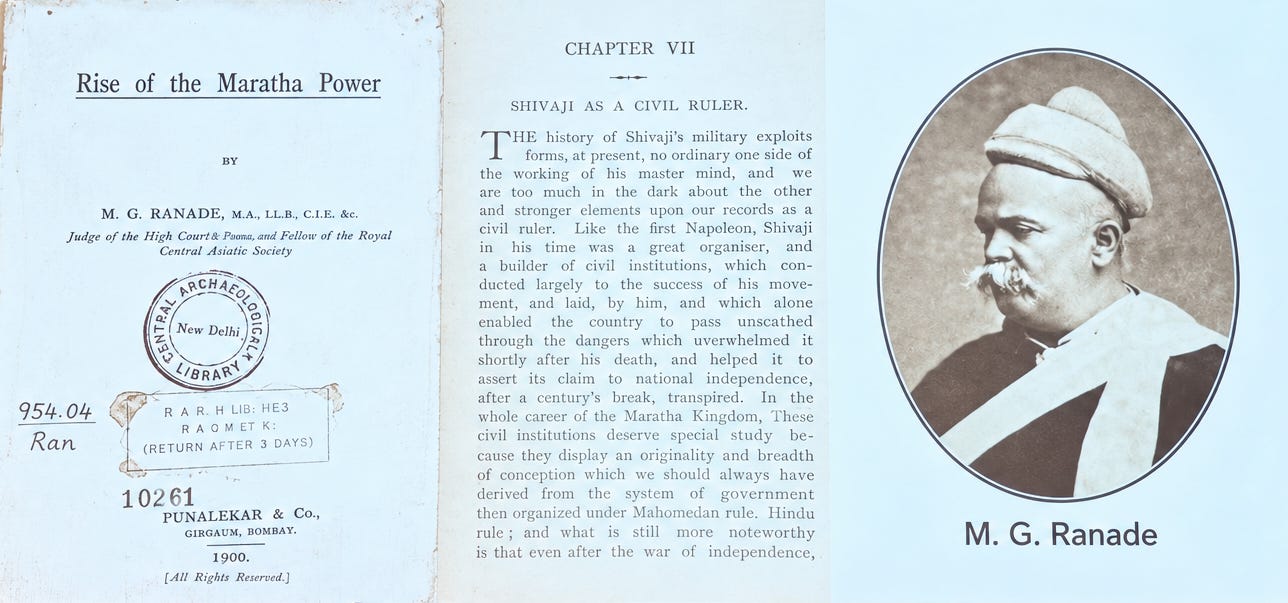
For those wanting to trace these intellectual roots further, Professor Sagar points to M.G. Ranade’s classic text, The Rise of Maratha Power. In its seventh chapter, Ranade examines Shivaji’s civil institutions, showing how early Maratha governance operated on non-hereditary, merit-based civil offices and direct cash revenues before succumbing to the hereditary principle that ultimately undid the experiment.
If this rich tradition of constitutional liberalism existed, why did it vanish from public memory? Professor Sagar points to a major turning point in the early 1890s. With the introduction of legislative councils and separate electorates by 1909, Indian politics shifted toward representative elections. To win elections, politicians had to mobilise groups based on caste, religion, and language. Leaders representing groups had a vested interest in keeping those identity groups intact rather than championing the individual. Consequently, individualistic liberal texts faded from shelves, leaving only two copies of Parmanand’s seminal book surviving into the modern era.
Yet, history does not end with political texts. While liberal political literature receded, the sociological and empirical foundation for liberalism grew quietly on the ground. Mass literacy, urbanisation, and the expansion of the middle class have given ordinary individuals the economic and social independence to make their own choices, pursue careers, and marry across traditional divides.
Conclusion
The lecture closed with a reflection on the dilemma of liberals today. True liberal change rarely arrives through loud political slogans or top-down movements. Instead, it builds slowly through quiet, everyday transformations in our economy, our institutions, and our homes. By looking beyond simplified colonial narratives, we can finally recover a rich indigenous heritage that proves individual freedom has deep roots in the Indian soil.